
10 Habits for a More Productive Life: Build a System That Actually Works
Stop relying on willpower and build a better system with these 10 habits for a more productive life. They’re designed to help you ship results consistently—without burning out.
July 27, 2026 at 12:34 PM
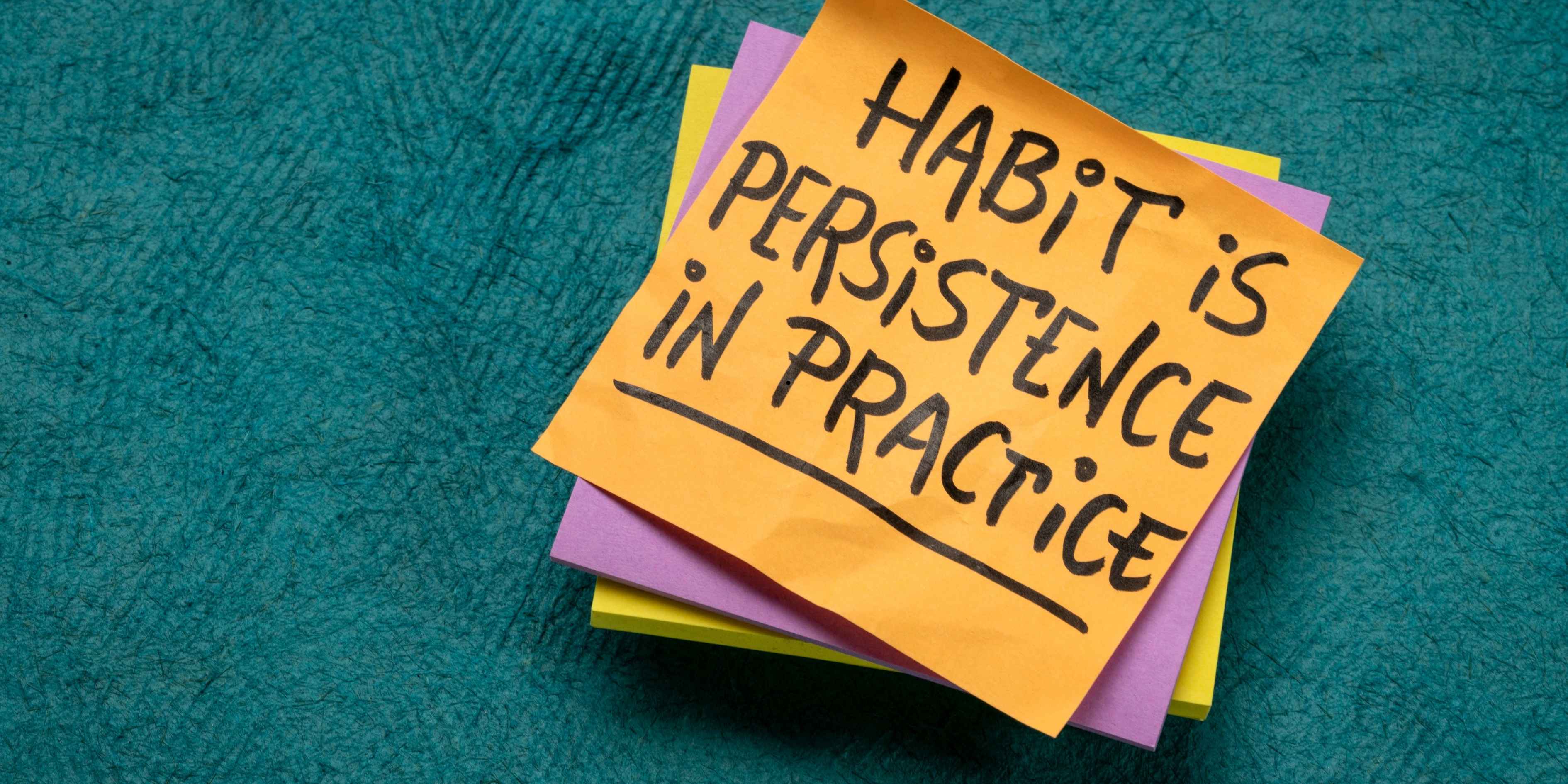
10 Habits for a More Productive Life
Stop relying on willpower and build a better system with these 10 habits for a more productive life. They’re designed to help you ship results consistently—without burning out.
Most people don’t fail at productivity because they lack willpower. They fail because they rely on willpower instead of systems. The difference between someone who consistently gets things done and someone who burns out by Wednesday isn’t talent or discipline: it’s habit architecture. The following 10 habits for a more productive life aren’t theoretical. They’re drawn from what actually works for people who deliver results week after week, year after year. Some will feel obvious. Others might challenge how you currently structure your day. The goal isn’t to adopt all of them overnight but to layer them in gradually until your default mode is productive, not reactive.
Mastering the Morning for Daily Momentum
How you spend the first 90 minutes of your day sets the tone for everything that follows. This isn’t motivational poster advice: research from the American Psychological Association consistently shows that morning routines reduce cortisol spikes and improve decision-making throughout the day. The trick is building a morning that works for your life, not copying someone else’s 4 a.m. cold plunge ritual.
The Power of Early Rising and Hydration
Waking up even 30 minutes before your household stirs gives you a window of uninterrupted time. That window is gold—use it for thinking, planning, or simply being quiet before the noise starts. Pair that early wake-up with 16 to 20 ounces of water before you touch coffee. Your body is dehydrated after sleep, and even mild dehydration (as little as 1.5% fluid loss) has been shown to impair concentration and increase fatigue. Coffee still has its place, but water comes first.
Eliminating Decision Fatigue with Pre-Planned Routines
Every decision you make costs mental energy. The average knowledge worker now makes over 35,000 decisions per day. The fewer trivial ones you burn through before 9 a.m., the more capacity you have for the ones that matter. Lay out clothes the night before. Eat the same two or three breakfasts on rotation. Script your morning so it runs on autopilot. This isn’t boring—it’s strategic.
Advanced Time Management Techniques for Professionals
Productivity tools are everywhere, but the real skill is knowing which time management techniques for professionals actually match your work style. A surgeon’s ideal system looks nothing like a freelance designer’s. The best approach combines structure with flexibility.
Implementing Time Blocking and Calendar Audits
Time blocking means assigning every hour of your workday to a specific task or category of work. Instead of a vague to-do list, you decide in advance that 9 to 11 a.m. is for deep project work, 11 to noon is for emails, and so on. The key most people miss is the calendar audit: once a month, review how you actually spent your time versus how you planned to spend it. The gap between intention and reality is where your productivity leaks live.
The Eisenhower Matrix: Prioritizing Urgent vs. Important
Dwight Eisenhower reportedly said, “What is important is seldom urgent, and what is urgent is seldom important.” The matrix built from this idea sorts tasks into four quadrants: urgent and important (do now), important but not urgent (schedule), urgent but not important (delegate), and neither (eliminate). Most people spend 80% of their day in the “urgent but not important” box, responding to other people’s priorities. Flip that ratio and your output changes dramatically.
Utilizing the Pomodoro Technique for Sustained Focus
The Pomodoro Technique is simple: work for 25 minutes, break for 5, repeat. After four cycles, take a longer 15- to 30-minute break. What makes it effective isn’t the timer itself but the psychological contract. You’re telling your brain, “I only need to focus for 25 minutes.” That lowers the resistance to starting, which is where most procrastination actually lives. If 25 minutes feels too short for your type of work, try 45/10 or 50/10 splits—the principle stays the same.
Cultivating a Distraction-Free Environment
Your environment shapes your behavior more than your intentions do. A study from UC Irvine found that after a single interruption, it takes an average of 23 minutes to fully return to a task. If you’re interrupted four times in a morning, you’ve essentially lost your entire deep work window.
Digital Minimalism and Notification Management
Turn off every notification that isn’t from a real human who needs you right now—no app badges, no promotional push alerts, no social media pings during work hours. On your phone, use Focus modes or scheduled Do Not Disturb windows. On your computer, close every tab that isn’t related to your current task. This sounds extreme until you try it for a week and realize how much mental bandwidth you’ve been giving away for free.
Setting Boundaries for Deep Work Sessions
Deep work requires boundaries that other people can see and respect. If you work in an office, use a physical signal: headphones, a closed door, a sign. If you work remotely, block “focus time” on your shared calendar and treat it as non-negotiable. Tell your team when you’ll be available and when you won’t. The people who consistently produce high-quality work aren’t antisocial—they’re just protective of their best thinking hours.
Optimizing Energy Levels Over Time
Productivity isn’t about squeezing more hours out of the day. It’s about matching your highest-energy periods to your most demanding work. Your body runs on ultradian rhythms—roughly 90-minute cycles of peak and trough energy throughout the day.
Strategic Breaks and the 90-Minute Rule
After about 90 minutes of focused effort, your brain’s prefrontal cortex starts to fatigue. Pushing through doesn’t make you tougher; it makes you slower and more error-prone. The fix is simple: take a genuine 10- to 15-minute break. Walk outside, stretch, stare out a window—don’t scroll your phone, because that’s not rest for your brain, it’s just a different kind of stimulation. The best performers, from musicians to surgeons, work in focused 90-minute blocks with real recovery between them.
The Impact of Nutrition and Movement on Cognitive Load
What you eat and how you move directly affect how well you think. A lunch heavy in refined carbs will tank your afternoon focus, while a 20-minute walk after eating can stabilize blood sugar and improve cognitive performance for the next two hours. You don’t need to become a biohacker. Just eat enough protein, drink water throughout the day, and move your body for at least 20 minutes. These basics outperform every nootropic supplement on the market.
Review and Refinement Habits
Building productive habits is only half the equation. The other half is reviewing whether those habits are actually working and adjusting when they’re not. Without a feedback loop, you’re flying blind.
The Daily Shutdown Ritual
At the end of each workday, spend five to ten minutes on a shutdown ritual. Review what you accomplished, capture any loose threads in a trusted system (a notes app, planner, or task manager), and write down your top three priorities for tomorrow. This gives your brain permission to stop working and means you start the next morning with clarity instead of chaos. This concept, popularized by Cal Newport, remains one of the simplest, highest-impact habits you can adopt.
Weekly Planning for Long-Term Goal Alignment
Daily planning keeps you productive. Weekly planning keeps you productive on the right things. Set aside 30 minutes each Sunday or Monday morning to zoom out. Ask yourself: What are my three most important outcomes this week? Are my daily priorities actually moving me toward my quarterly or yearly goals? This weekly check-in prevents the common trap of being busy every day but making no meaningful progress over months.
Sustaining Productivity Through Self-Care
Most productivity advice treats you like a machine that just needs better software. But you’re human, and humans need sleep, connection, and downtime to function. The most productive people aren’t grinding 14-hour days. They protect their sleep (seven to eight hours, consistently), maintain relationships that recharge them, and have hobbies that have nothing to do with work.
Self-care isn’t a reward you earn after being productive—it’s the foundation that makes sustained productivity possible. Chronic sleep deprivation alone reduces cognitive performance by up to 25%, according to the National Sleep Foundation. Skipping rest to work more is like skipping oil changes to drive more: it feels efficient until the engine seizes.
These 10 habits for a more productive life aren’t a checklist to complete in a single week. Pick one or two that address your biggest bottleneck right now. Practice them until they feel automatic, then add another. The goal isn’t perfection—it’s a system that keeps you moving forward even on the days when motivation is nowhere to be found. Start with your morning, protect your focus time, and review your progress weekly. Six months from now, you won’t recognize how you used to work.